
Around 40 homeowners along the shoreline of Bayview Drive have been extending their backyards onto the city’s shoreline land, which includes wildlife habitat and a popular public path. Some users of the public path find this encroachment alarming.
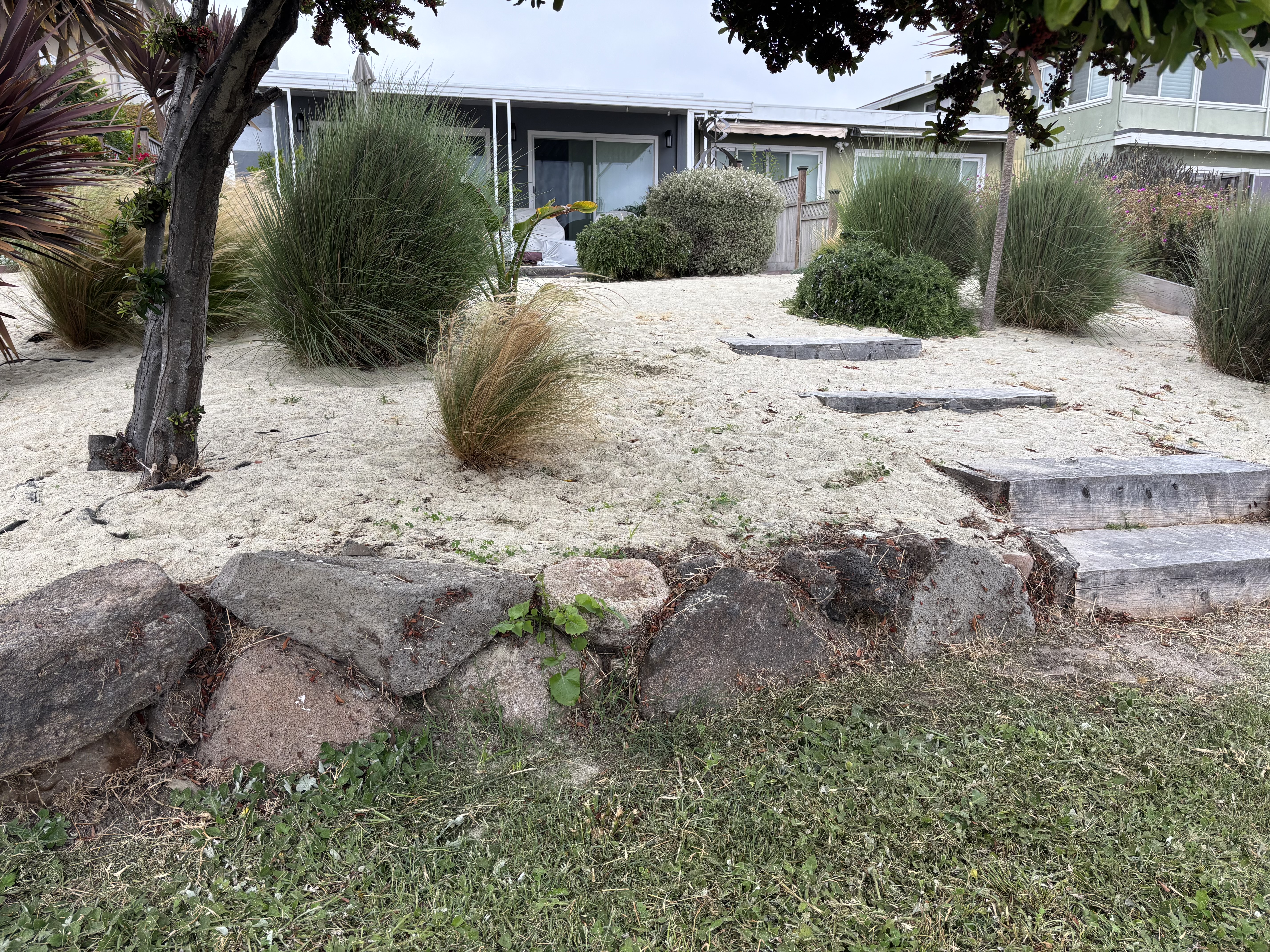
Describing it as “a slow takeover,” Alameda residents Jennifer Gray and Alan Bradley wrote to the mayor and city council on June 14, stating, “as Bayview Drive residents have seen their neighbors getting away with this appropriation, more have jumped on board and compounded the problem.” The letter asked, “Please let us know what will be done about these violations of public land.” No one has responded, the couple told the Alameda Post.
 The row of backyards abuts a strip of open space that lies between the homes and the Bay, adjacent to the Elsie Roemer Bird Sanctuary. Many bird watchers frequent the area, while others use the informal natural path for daily walks between the Bay Farm Bridge and Shoreline Drive.

“I’ve lived in Alameda for a long time and have walked that path since my kids were little–30 years or so,” Gray told the Alameda Post. “I started noticing the encroachment really take off during COVID and just finally decided to raise the topic with the city after it became more egregious.”
The extended backyards include an array of landscaping elements and styles. Pathways from the homes are defined by wooden boards, imported sand, river rocks or flat walking stones, with some landscaped up to the edge of the trail with constructed terraces down the sloped terrain.
Other additions include indoor-outdoor carpet, ground cover, lawn, concrete garden wall blocks, yard art, pots, plants, and bamboo and shrubbery privacy screens. One homeowner is growing corn.
The yard extensions reduce the amount of open space for public enjoyment and leave trail users under the impression that they are trespassing if they wander onto the homeowners’ landscaping. The encroachment also reduces the amount of space for upland birds to find refuge. 
 One property sold after its listing featured the extended backyard landscaping as a selling point. Another current property listing features a home’s extended beach-like backyard.
“This area should be preserved to support native salt marsh plants which provides vital habitat for resident and migratory birds,” said Sharol Embry, retired supervising naturalist at the Crab Cove Visitor Center. “Non-native plant species don’t provide the same rich habitat and can even spread from the yards to become invasive pests.”
“Why has the city turned a blind eye to this?” Gray and Bradley asked the mayor and city council in their letter. “It is clear that this public coastal land is being rapidly decimated” and “it is clearly public property in need of your protection.”
 Meanwhile the city is working on drafting a state-mandated sea level rise resiliency plan for Alameda’s southern shoreline that is expected to be released next year, according to the city’s adaptation timeline. The plan will include plans for this stretch of shoreline, and it could take decades to acquire funding for construction. All Bay Area city plans will be approved by the San Francisco Bay Conservation and Development Commission (BCDC), the state agency with regulatory authority over the first 100 feet inland from the mean high tide waterline around the Bay.
BCDC has no records of permits for landscaping encroachments in the area, Rylan Gervase, Director of Legislative & External Affairs, told the Alameda Post. He said that violations are handled individually and formal complaints are not always required.
“BCDC handles each violation separately for each property owner. For example, if there were five property owners, there would be five separate violations,” said Gervase. “A violation report is helpful but not always necessary. If BCDC staff conducts a site visit or identifies a violation through imagery or other information, we may pursue enforcement of that violation.”
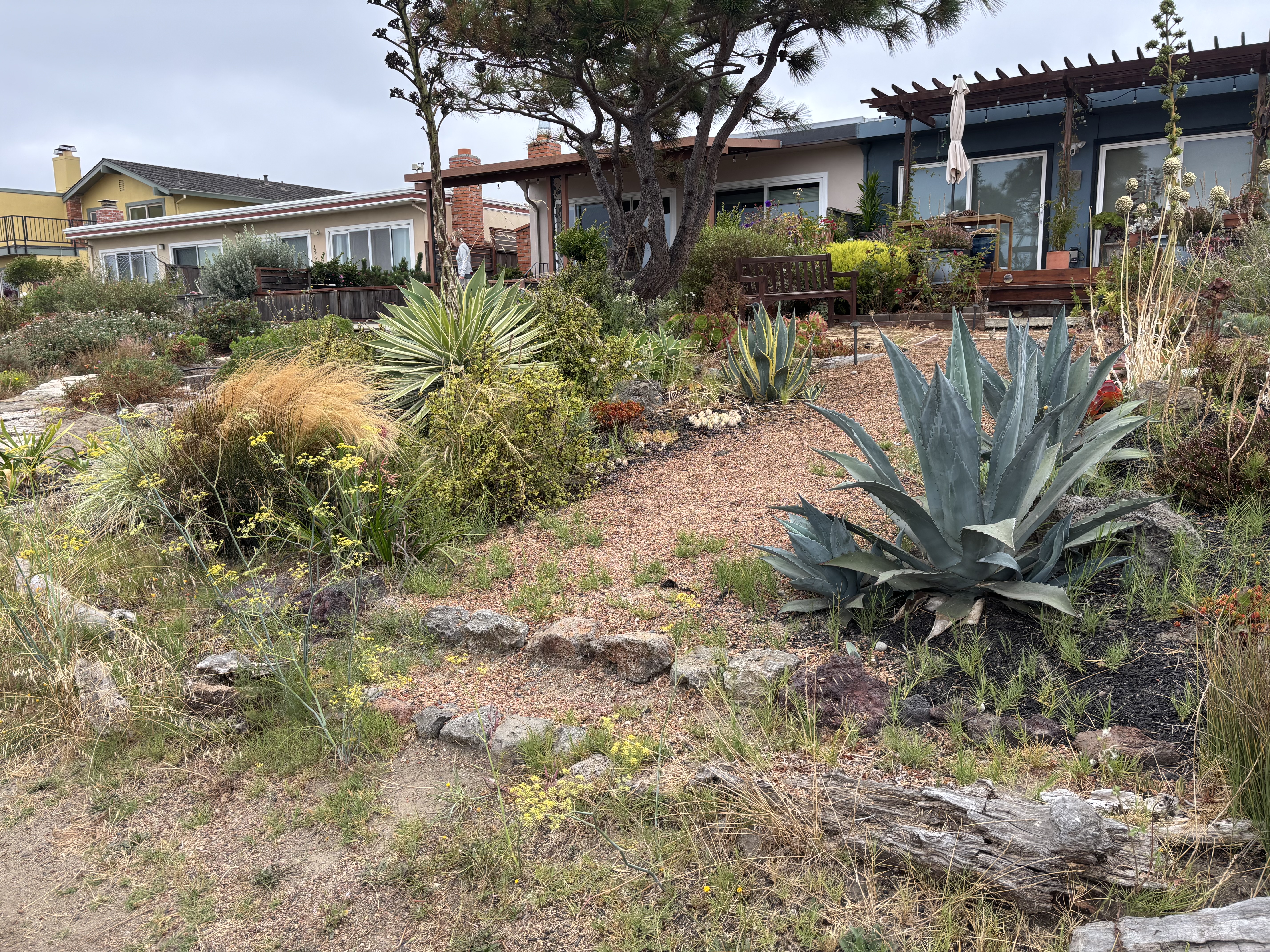
 However, Gervase explained,“There could still be coordination among the property owners and BCDC to resolve related violations. Depending on the nature of the violations, we determine the most appropriate approach to bring a group into compliance, whether that means addressing the violations individually or coordinating efforts among property owners.”
The city did not provide an answer to an inquiry from the Alameda Post about what options the city could take to reverse this encroachment trend.
Gray and Bradley think the city’s property should serve as an extension of the Elsie Roemer Bird Sanctuary. Embry would like to see a living levee, with a public access trail, that protects the shoreline with native salt marsh plant species. That would be “a win-win for homeowners and wildlife that depend on the small amount of marshland left around San Francisco Bay,” Embry said.
In related news, BCDC is in the process of updating its 2007 “Shoreline Plants, a Landscape Guide for the San Francisco Bay Area.” Public engagement begins on September 14 at a Design Review Board meeting. The three objectives of the plan are to improve habitat, improve the public access experience, and stabilize the shoreline.
Originally published in the Alameda Post
